




Prodrone PRO 12T Armor LB
Leave feedback on the product

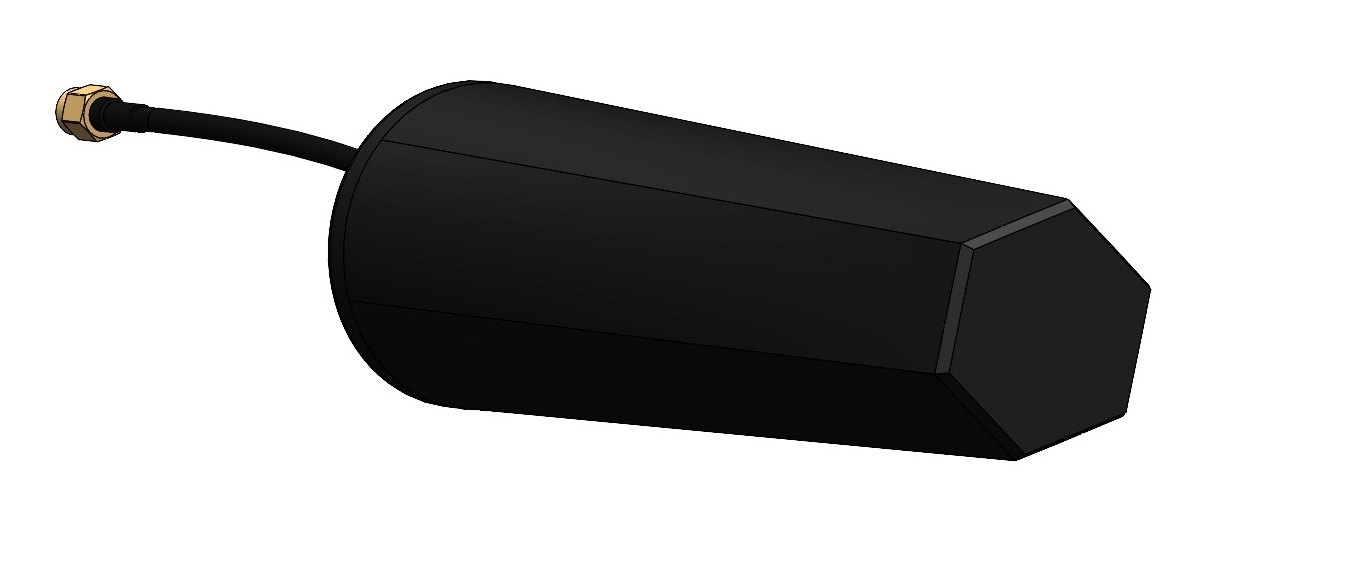
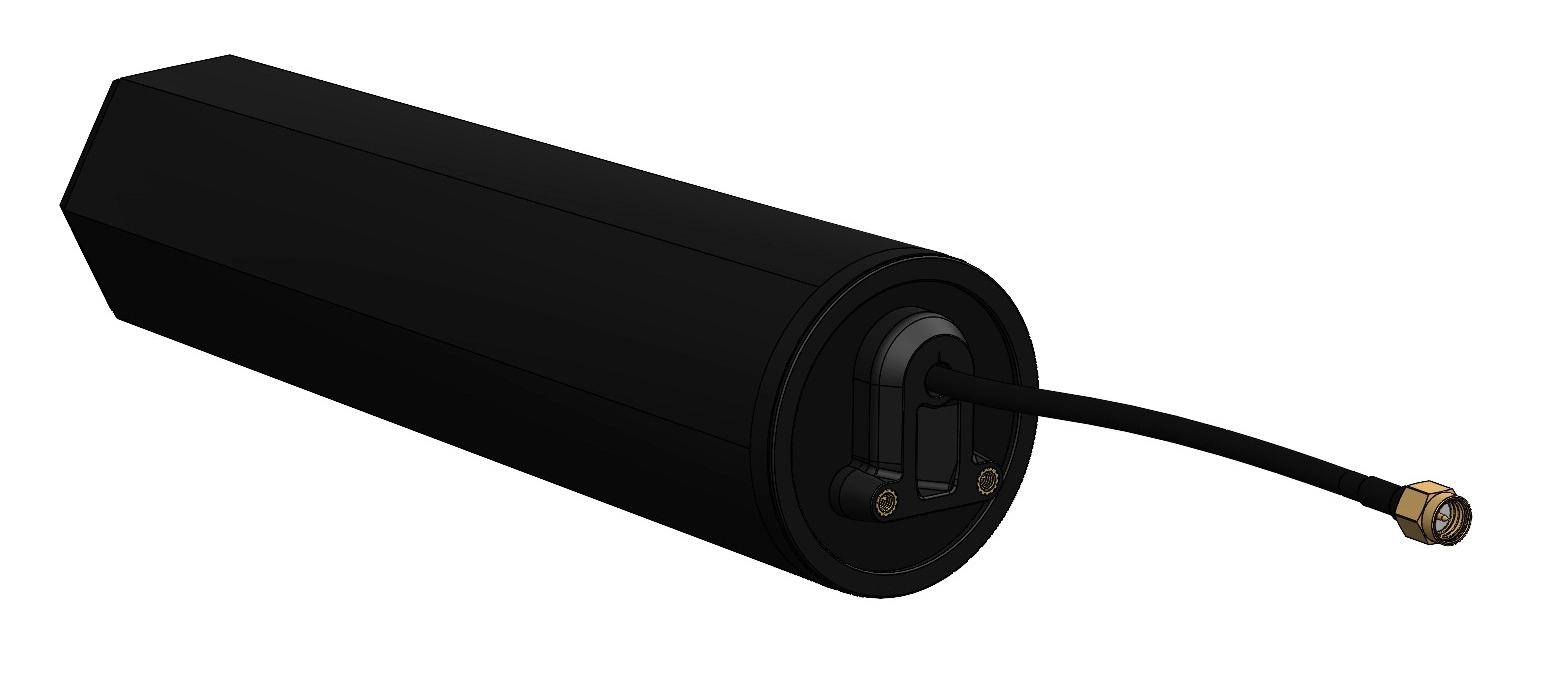
Enclosed 5.8 GHz helical antenna, 14 dBi. VSWR below 1.2 across 5000–5500 MHz, two M3 screw mount, 127 mm cable. Every unit individually tuned.
Shipping costs are not included in the price.
Shipping costs are not included in the price.
Select product variant
Individual variants may differ in price
Product code: 85_20260812193955
Item description
PRO 12T Armor LB — Enclosed Helical Antenna
The PRO 12T Armor is a directional 4,9 - 6.0Ghz GHz helical antenna with 14 dBi gain, sealed in a protective housing and built for ground stations, antenna trackers and long range FPV and UAV systems. This version is tuned for the lower part of the band: VSWR below 1.2 across 5000–5500 MHz.
Protective housing and tracker mounting
- Copolymer housing, 52.5 mm diameter, 173 mm long. The radiating element is fully enclosed against impact, rain and wind — the antenna handles transport and field use without special care.
- Two M3 mounting screws on the base instead of a single one. The antenna won't rotate on its mount and withstands the acceleration of a fast tracker along with structural vibration.
- Flexible RG316D cable, 127 mm, measured from the mounting base to the end of the SMA connector. Instead of semi-rigid cable you get freedom to route it and to position the antenna relative to your VRX, including inside a tightly packed ground station.
5.8 GHz antenna specifications
- Low-band tuning: VSWR below 1.2 across 5000–5500 MHz (±20 MHz accuracy)
- Wide working range: VSWR below 1.5 from 4.9 to 6.0 GHz
- Directional gain: 14 dBi
- Main beam approx. 30°, widening usefully to 50–60° at shorter range
- Circular polarization, RHCP or LHCP — selected when ordering, permanently fixed
- Maximum input power: 50 W
- Connector: SMA or RP-SMA
- Construction: 12 turns, 45 mm reflector, 1.2 mm enamelled copper wire, soldered connector pins
Every antenna individually tuned on a VNA
We don't sample-test a batch. Every unit is swept individually on a vector network analyzer and brought onto its target band. Fitting the connector is itself the final tuning step, which is why these antennas can't be pulled off a shelf — each one is built for a specific order. More on our [quality process].
Every antenna carries a label with its own measured range and the VSWR it achieved — not a model-level catalogue figure, but the result for that individual unit. An antenna that doesn't come in under our threshold doesn't ship. The label is the only record of that measurement, so keep it: on your next order, quote that range and we'll tune the new unit to the same point.
Ordering several? We tune them to a common band as standard, at no extra charge. Antennas from one set work across the same range, so you won't end up with one performing beautifully at 5100 MHz next to one that only wakes up above 5400 MHz. Mixing antennas from different sources makes this a real problem: bands that don't overlap mean reflected power, a transmitter running hot, and range that depends on which channel you picked.
Custom antennas — different band, cable, connector
We're an antenna manufacturer, not a reseller. Design, build and tuning all happen in house, so the parameters follow the customer rather than the catalogue:
- A different band — tuned to your specified frequency, including outside our standard range. We've built antennas from around 400 MHz up to 6 GHz. See our [antenna tuning service].
- Different cable length and connector — cut to suit your installation.
- Matching gear you already own — send us the range printed on your existing antenna's label and we'll tune the new one to the same point.
- Airframe-integrated versions — we've designed and measured antennas built into airframe structures.
- Production runs for institutions, universities and UAV manufacturers, with measurement documentation.
Behind it: our own jigs and fixtures, in-house CNC and 3D printing, design in SolidWorks. Manufactured in Poland — [about us].
RHCP or LHCP — choosing your polarization
The transmitting and receiving antennas must share the same circular polarization. RHCP works with RHCP, LHCP with LHCP. Get it wrong and you lose 20–30 dB — effectively a dead link. In exchange, circular polarization gives you resilience against reflections and multipath, holding a steadier signal exactly where linear starts to break up. It's one reason helical antennas and [cloverleafs] hold up in urban environments and low-altitude flight.
Product Reviews
If you've added a review and it doesn't appear on the list, it may be pending moderation.
Leave feedback on the product
 Log in with Facebook
 Log in with Google

