




Uni-Dipole 300-1500Mhz ELRS
Leave feedback on the product

Shipping costs are not included in the price.
Shipping costs are not included in the price.
Select product variant
Individual variants may differ in price
Product code: 104_20260123123113
Item description
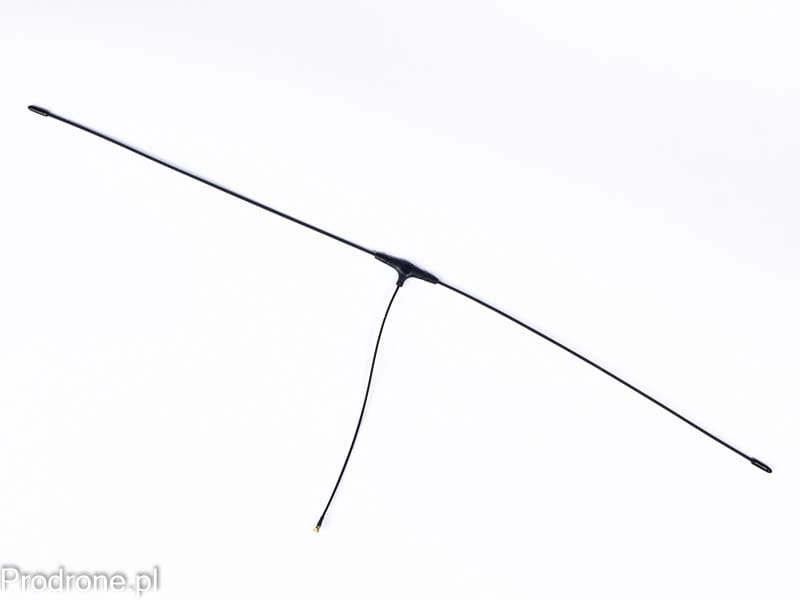
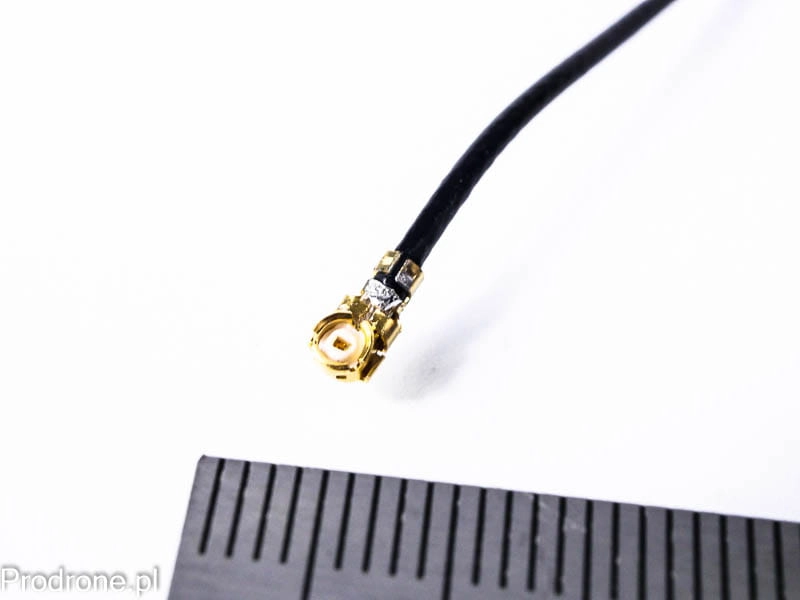
Universal Dipole Antenna with ufl connector and 15cm cable and u'fl (IPEX, IPEX1) connector
Perfect for ExpressLRS, ELRS, LoRa and All LRS Systems
This universal DIY dipole antenna is specifically designed for long-range radio systems used in drones, RC models, and IoT applications.
Looking for perfectly tuned dipole ? pleas check our products:
Compatible with Popular LRS Systems:
RC/Drone Control Links
- ExpressLRS (ELRS) - 868 MHz (EU), 915 MHz (US), 433 MHz, 2.4 GHz*
- TBS Crossfire - 868 MHz (EU), 915 MHz (US)
- TBS Tracer - 868 MHz (EU), 915 MHz (US)
- ImmersionRC Ghost - 2.4 GHz*
- FrSky R9 - 868 MHz (EU), 915 MHz (US)
- DragonLink - 433 MHz
- EZUHF - 433 MHz
- OpenLRS - 433 MHz, 868 MHz
- RFD900/RFD868 - 868 MHz, 900-930 MHz
LoRa/LoRaWAN Systems
- LoRa EU868 - 863-870 MHz (Europe)
- LoRa US915 - 902-928 MHz (Americas)
- LoRa AS923 - 915-928 MHz (Asia-Pacific)
- LoRa CN470 - 470-510 MHz (China)
- The Things Network (TTN) - 868/915 MHz
- Helium Network - 868/915 MHz
- Meshtastic - 868/915 MHz, 433 MHz
Telemetry & Data Links
- MAVLink telemetry - 433/868/915 MHz
- PX4/ArduPilot telemetry - 433/868/915 MHz
- 3DR Radio - 433/915 MHz
- HolyBro SiK Radio - 433/868/915 MHz
GPS/GNSS Receivers
- GPS L2 - 1227 MHz
- GPS L5 - 1176 MHz
- GLONASS L2 - 1246 MHz
- Multi-band GNSS - 1200-1600 MHz range
Aircraft Tracking
- ADS-B - 1090 MHz
- FLARM - 868 MHz
What is a Dipole Antenna?
A dipole antenna is one of the most fundamental and widely used antenna designs in radio communication. It consists of two conductive elements (radiators) fed at the center, creating a balanced radiating system.
Key Characteristics:
- Simple and efficient - proven design used for over 100 years
- Omnidirectional pattern - radiates equally in all horizontal directions
- Natural 50Ω impedance - matches standard radio equipment
- Broadside radiation - maximum signal perpendicular to antenna axis
- Minimal ground plane required - works with symmetrical feed
Why Dipoles for LRS Systems?
- Better range than monopoles in open field conditions
- Lower takeoff angle - ideal for ground-to-air communication
- Minimal noise pickup - balanced design rejects common-mode interference
- No ground plane needed - perfect for remote receivers and base stations
- Predictable patterns - consistent performance in various orientations
This is not an ordinary dipole - it's a universal, field-adjustable solution that YOU can tune at home!
What Makes It Universal?
Traditional dipoles are cut for ONE specific frequency. Our design features an extra-long radiator that you can trim to match ANY frequency from 433 to 1360 MHz.
One antenna works for:
- ExpressLRS 868 MHz (EU)
- ExpressLRS 915 MHz (US)
- ExpressLRS 433 MHz (long range)
- TBS Crossfire (868/915 MHz)
- LoRa EU868 / US915
- DragonLink / EZUHF (433 MHz)
- GPS receivers (1200+ MHz)
- ADS-B tracking (1090 MHz)
- And many more!
Home Tuning - Simple and Fast!
No specialized equipment required - just basic tools:
- Wire cutters or sharp scissors
- Ruler or caliper
Cut, test, done! - Takes only 5 minutes. Before cutting please remove caps on dipole ends.
Perfect for experimenters - Change frequency anytime
One antenna, multiple projects - No need to stock different models
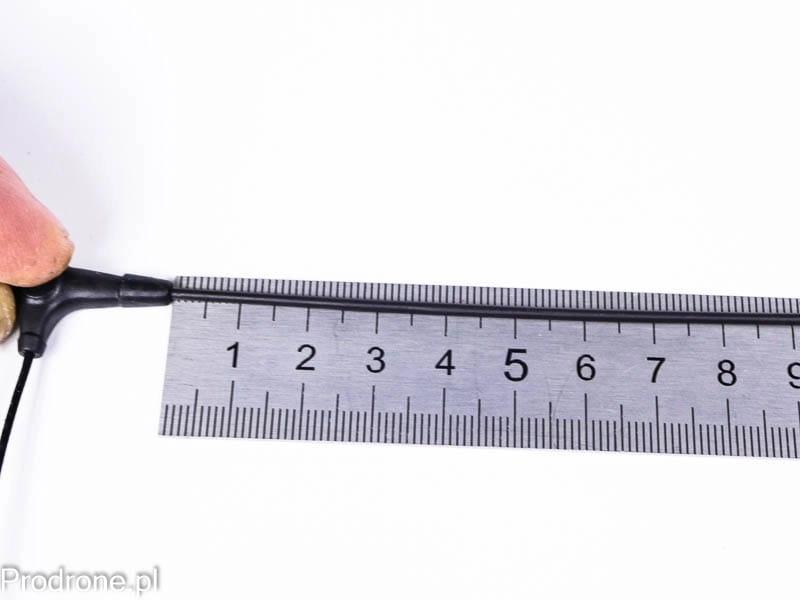
Check the product gallery for detailed photos showing:
- Where to measure from (housing end reference point)
Why Choose This Antenna for Drones & RC Models?
Ultra-Lightweight Design
- Minimal weight impact on flight time
- Perfect for racing quads, long-range builds, and RC models
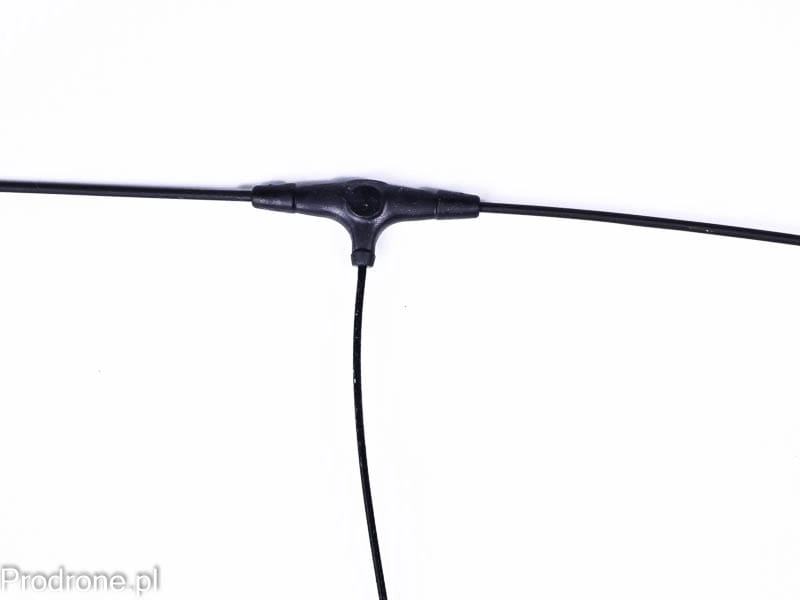
- Multi-strand steel cable radiator with plastic coating
Compact & Low Profile
- Low drag coefficient - minimal aerodynamic impact
- Ideal for tight installations in FPV equipment
- Perfect for mounting on ExpressLRS receivers
Flexible & Durable
- Multi-strand construction withstands vibrations
- Bends without breaking during crashes
- Impact-resistant plastic housing
- Survives hard landings and prop strikes
- like no other our UFL connectors are soldered to cable
Universal Solution
- One antenna for multiple frequencies (300-1360 MHz and even way more)
- Switch between ExpressLRS bands easily
- Test different LRS systems without buying new antennas
- Reduces spare parts inventory
Field-Adjustable
- Cut to length on-site without specialized tools
- Quick frequency changes during testing
- Perfect for experimental RC builds
- Ideal for multi-band diversity setups
Excellent for LRS Applications
- Lower noise floor than monopoles
- Better range in line-of-sight conditions
- Omnidirectional coverage for diversity systems
- Works great as base station antenna
The lengths provided in this guide are APPROXIMATE based on laboratory measurements. For optimal performance, especially in critical applications, we strongly recommend fine-tuning with a VNA (Vector Network Analyzer).
Factors affecting actual length:
- Installation environment and ground plane
- Feed cable type and routing
- Nearby metallic objects
- Manufacturing tolerances
For best results: Cut progressively in 2-3mm increments while monitoring VSWR on VNA until VSWR < 1.5
Don't have a VNA? No problem! The reference table provides excellent starting points for most applications. Field testing in your actual setup will show if minor adjustments are needed.
Radiator Cutting Reference Table
THESE VALUES ARE APPROXIMATE - VNA tuning strongly recommended for critical applications!
Measure from the end of housing. See product gallery for measurement reference photo!
Cut both sides of dipole to same lengths.
| Frequency | Cut Length | Common Applications |
|---|---|---|
| 433 MHz | 118 mm | ELRS 433, DragonLink, EZUHF, OpenLRS |
| 450 MHz | 113 mm | PMR446, UHF CB |
| 470 MHz | 109 mm | LoRa CN470, DVB-T |
| 500 MHz | 102 mm | General telemetry |
| 600 MHz | 85 mm | UHF TV, LTE band 28 |
| 650 MHz | 78 mm | LTE band 28 |
| 700 MHz | 73 mm | LTE band 28, DVB-T2 |
| 800 MHz | 64 mm | LTE band 20, GSM |
| 868 MHz | 59 mm | ELRS 868, Crossfire EU, LoRa EU, R9, Tracer |
| 915 MHz | 56 mm | ELRS 915, Crossfire US, LoRa US, R9 US |
| 1000 MHz | 51 mm | 1 GHz telemetry |
| 1090 MHz | 47 mm | ADS-B aircraft tracking |
| 1200 MHz | 43 mm | GPS L5, GNSS |
| 1260 MHz | 40 mm | GLONASS, GNSS L2 |
| 1360 MHz | 38 mm | GPS L2, telemetry |
Pro Tips from Prodrone.pl
Did you know...
- Insulated radiator has velocity factor VF ≈ 0.68 (not 0.95 like bare wire)
- Housing with PCB adds capacitance
- ExpressLRS works great even with VSWR up to 2.0, but lower is always better
Installation Matters for LRS!
- Dipole requires symmetrical ground plane (carbon frame works)
- Distance from metal: minimum λ/4 (868 MHz = ~86mm, 915 MHz = ~82mm)
- Feed cable: perpendicular to antenna axis (minimizes cable radiation)
- Cable length matters
For ExpressLRS/Crossfire Specifically:
- Vertical polarization works best for ground-to-air
- Horizontal works better for plane-to-ground (belly mounted)
- Diversity is your friend - use different orientations
- Range improves significantly with proper antenna tuning - please check our finetuned antennas. Each antennas (except this one :) ) that we sell is perfectly tuned on laboratory equipment.
Home Workshop Tips:
- Sharp tools = clean cuts = better performance
- Mark before cutting - measure twice, cut once
- Keep cut radiators organized and labeled
- Consider buying 2 antennas for experimentation
- Test range before and after tuning to verify improvement
Product Technical Specifications
| Parameter | Value |
|---|---|
| Frequency range | 300-1500 MHz (adjustable) |
| Type | Dipole λ/2 |
| Radiator | Multi-strand steel cable with insulation |
| Housing length | 38 mm |
| Connector | U.FL |
| Impedance | 50 Ω |
| Typical VSWR | < 1.5 (after tuning) |
| Operating temp | -40°C to +85°C |
| Weight | ~6,5g (300 MHz) |
| Housing material | Impact-resistant plastic |
| Radiator material | Steel multi-strand with PVC/PE coating |
| Polarization | Linear (vertical when mounted vertically) |
FINAL REMINDER: Values in this guide are APPROXIMATE starting points. For optimal performance, especially in commercial products or critical applications, professional VNA tuning is STRONGLY RECOMMENDED.
Prodrone.pl offers VNA tuning services - contact us for details.
Home users: The reference table provides excellent results for most hobbyist LRS applications. ExpressLRS and Crossfire work great even with ±2mm tolerance. Don't be intimidated - this is easier than it looks!
January 2026 | Prodrone.pl - Made in Poland
Product Reviews
If you've added a review and it doesn't appear on the list, it may be pending moderation.
Leave feedback on the product
 Log in with Facebook
 Log in with Google
We care about your privacy
Cookies and related technologies allow the website to function properly and help us adjust the offer to your needs. You can choose to accept our use of all these files and go to the store, or adapt the use of files to your preferences by selecting "Customize Consents".
Cookies settings
Here you can define your preferences regarding the use of cookies.
These files are necessary for our website to function so they can't be switched off.
These files allow you to use other functions of the website (other than those necessary for its functioning). Enabling these files will give you access to the full functionality of the website.
These files allow us to analyze our online store, which may contribute to its better functioning and adaptation to the needs of our Users.
With these files, we can conduct marketing activities.

